


By Rabiu Sanusi
The Honourable Minister of State for Education, Suwaiba Sa’id Ahmad, has commended the quality of projects being executed under the World Bank-supported Adolescent Girls Initiative for Learning and Empowerment (AGILE) programme in Kano State.
This was contained in a statement issued by the Director of Public Enlightenment, Musbahu Amin Yakasai, and made available to journalists.
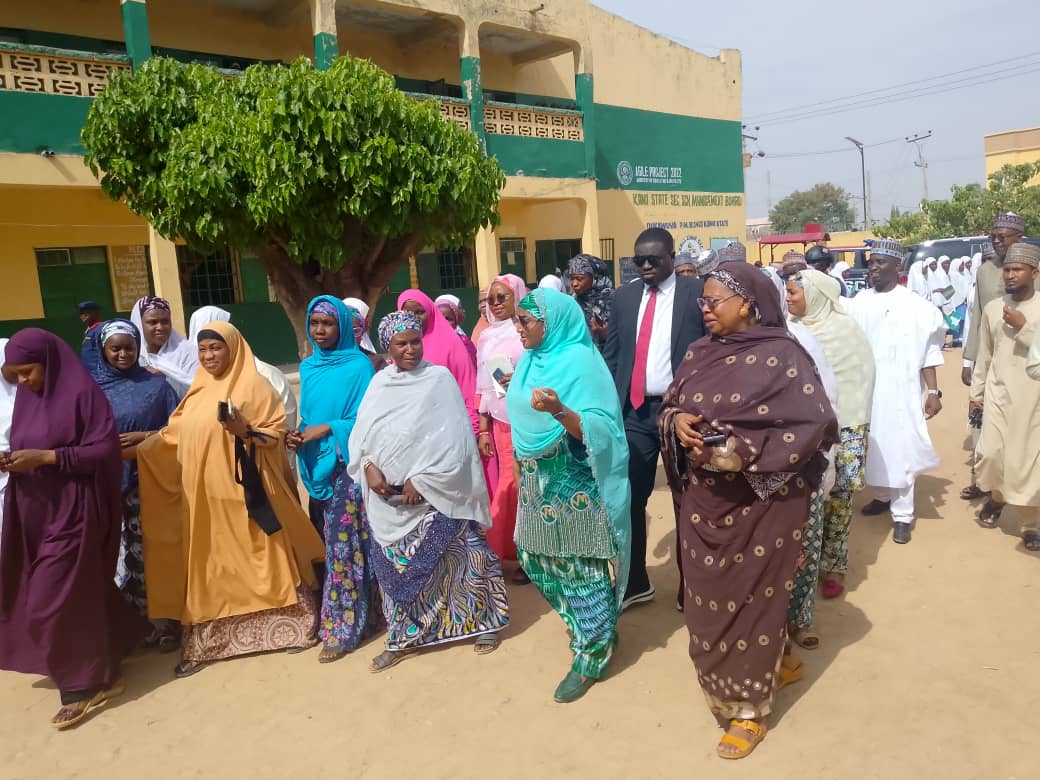
According to the statement, Professor Suwaiba made the commendation during an inspection visit to selected AGILE project sites in Kano, including the Women Training Centre (WTC) Kano and Government Girls Secondary School (GGSS) Dukawuya.
While expressing satisfaction with the standard of work at the sites visited, the Minister directed contractors handling some of the projects to make necessary corrections where necessary to ensure the delivery of quality infrastructure.
She applauded President Bola Ahmed Tinubu for supporting the AGILE initiative, describing the programme as a major step toward improving girl-child education and expanding access to quality learning opportunities for girls across the country.
The Minister also expressed appreciation for the warm reception accorded to her during the visit.
Earlier, the Kano State Commissioner for Education, Gwani Dr. Ali Haruna Abubakar Makoda, disclosed that the state government, under the AGILE project, would renovate about 300 schools across Kano State.
He further revealed that 49 new girls’ schools would be constructed across the state’s 484 wards to strengthen access to education for girls.
The commissioner commended Governor Abba Kabir Yusuf for prioritising the education sector and investing heavily in initiatives aimed at improving learning environments and educational outcomes in the state.
He also appreciated the Honourable Minister for visiting Kano State to inspect the AGILE projects and for her continued support toward advancing education in the state.
The AGILE project is a World Bank-supported initiative focused on improving secondary education opportunities for adolescent girls through enhanced infrastructure, increased access, and empowerment programmes.