


Christiana Gokyo, Jos
Plateau State Governor, Barr. Caleb Manasseh Mutfwang, has said that the Special Dialogue and Security Conference is a significant and strategic engagement that brings together critical actors whose roles are indispensable in shaping lasting solutions.
These include government institutions, security agencies, traditional rulers, religious leaders, civil society organisations, and community representatives.
He reminded participants that the task before them requires honesty, courage, and a willingness to confront difficult truths.
He said they must resist the temptation to apportion blame and instead focus on building consensus around practical and implementable solutions.
According to him, sustainable peace can only emerge where there is trust, fairness, and a shared commitment to the common good.
Speaking at a one-day conference of the House of Representatives Ad Hoc Committee on Security Dialogue, held at Crispan Hotel, Jos on Tuesday, the Governor, who was represented by the Deputy Governor, Hon. Mrs. Josephine Piyo, said the theme of the conference is “Restoring Stability and Unity: A Multi-Stakeholder Special Dialogue/Security Conference on Security in Plateau State and Beyond.”
He urged participants to be mindful that unity is not automatic; it must be deliberately cultivated.
He said people must reject narratives that divide them and instead promote values that bind them together as one people with a shared destiny.
According to him, the expectations of citizens are clear: they want safety, stability, and the freedom to pursue their livelihoods without fear.
It is therefore the collective responsibility of all stakeholders to meet these expectations with urgency and sincerity.
“As a government, we reaffirm our unwavering commitment to protecting lives and property, upholding the rule of law, and ensuring that justice is not only done but seen to be done,” he stated.
“We will continue to work closely with all stakeholders represented here to translate the outcomes of this dialogue into tangible actions,” he assured.
He further noted that the dialogue reflects a clear recognition that the security situation in Plateau State is not isolated, but part of a broader national concern that demands collective action, strategic thinking, and sustained engagement.
According to him, over the years, successive administrations in Plateau State have grappled with recurring cycles of violent attacks and unrest.
Leaders such as Senator Joshua Chibi Dariye, Senator Jonah David Jang, and Senator Simon Lalong each confronted these challenges and made concerted efforts to address them.
However, despite these interventions, the situation has persisted in varying degrees to the present day, even with decisive steps taken to revamp the previously moribund state security outfit, Operation Rainbow, including the recruitment of personnel to strengthen early warning systems and enhance intelligence gathering.
He added that the government also established the Plateau Peace Building Agency, equipped with modern tools, including surveillance technology, to support coordinated security operations.
Over 300 operational vehicles belonging to security agencies were refurbished, while motorcycles were procured to improve rapid response capabilities, particularly in rural and hard-to-reach communities.
Recognising the importance of non-kinetic approaches, the administration prioritized dialogue and reconciliation by reconstituting the Plateau State Inter-Faith Advisory Council.
The council has since demonstrated commendable leadership in fostering trust, promoting understanding, and addressing sensitive issues among diverse groups within the state.
He noted that the state capital has experienced increased patronage in its hospitality sector, with hotel occupancy rates ranking among the highest in Northern Nigeria.
This reflects growing confidence among visitors, investors, and business stakeholders who continue to engage in economic activities across the state, until the recent temporary setback.
However, he stressed that while the challenges are real, they are neither insurmountable nor beyond resolution.
Security goes beyond the deployment of personnel and resources; it encompasses justice, inclusion, economic opportunity, and the assurance that every citizen, regardless of background, has a stake in peace.
“It is therefore imperative that our response be comprehensive, addressing both the immediate threats and the underlying drivers of conflict,” he said.
He added that the administration has adopted a multi-layered approach, strengthening collaboration with security agencies to enhance operational effectiveness and intelligence coordination.
At the same time, he said, the government is investing in peacebuilding initiatives that promote dialogue, reconciliation, and community ownership of security processes.
“We are also paying close attention to the socio-economic dimensions of insecurity, particularly youth unemployment, rural vulnerability, and misinformation, which often serve as catalysts for unrest.
“Our interventions are therefore designed not only to respond to crises, but to prevent them,” he said.
House Committee Chairman’s Address
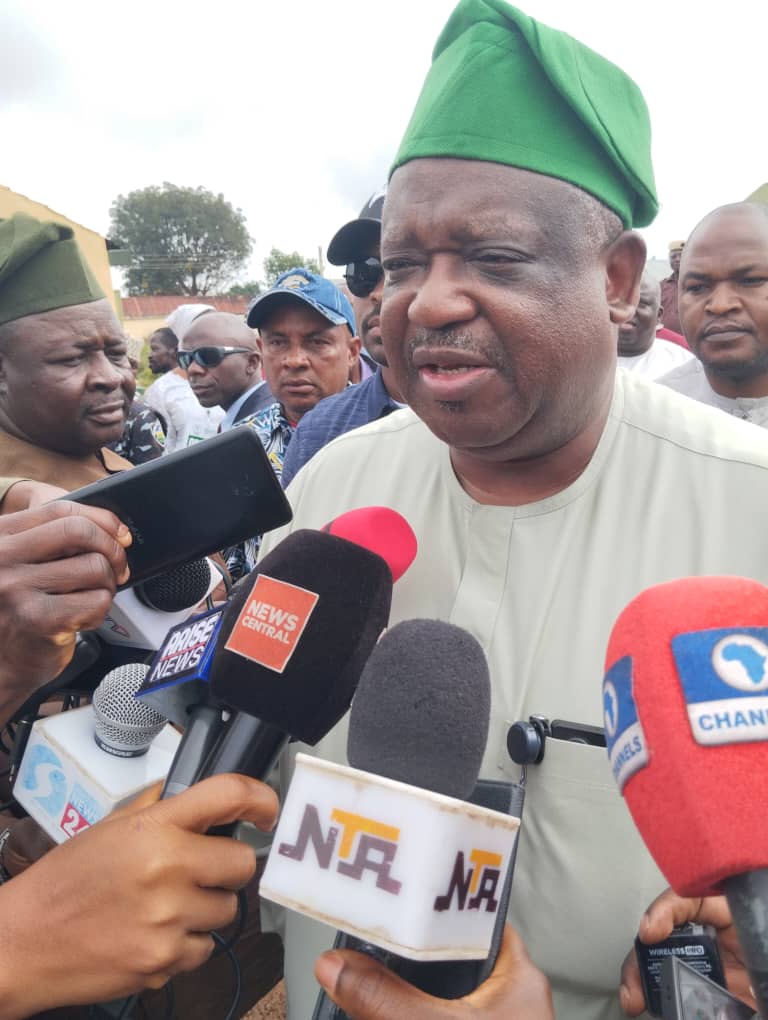
In his welcome address, the Chairman of the House Ad Hoc Committee on Security Dialogue, Hon. Wale Ahmed, said the committee exists because the 10th House of Representatives, under the leadership of Rt. Hon. Abbas Tajudeen, heard the cry of Plateau and resolved that all hands must be on deck to restore peace to Plateau, the Home of Peace and Tourism.
“We are here to confront this with courage, clarity, and collective resolve,” he said.
He noted that President Bola Ahmed Tinubu has directed special security deployments, approved humanitarian interventions, and insisted that the cries from Plateau must be heard and addressed with action.
According to him, the 10th House of Representatives stands ready to do what lawmaking demands.
“Where gaps exist in our laws, we will close them. Where policies need backing, we will legislate. Where communities need protection, we will empower. We will enact and strengthen laws that sustain peace in Plateau, not just today, but for generations,” he said.
He further said the strong working relationship between the President and the National Assembly has become a bridge of progress, adding that unity of purpose has improved interventions, prioritized security funding, and ensured Plateau is no longer forgotten.
However, he stressed that peace cannot be enforced by guns alone but must be built collectively through inclusive engagement.
He called for the participation of government at all levels, traditional rulers, security agencies, religious leaders, civil society, academia, women, youth, and victims whose experiences reflect the urgency of peacebuilding.
“Inclusion is not charity; inclusion is a strategy. When people are heard, they heal. When they heal, they forgive. When they forgive, they rebuild,” he said.
He concluded that sustaining peace requires institutionalising dialogue not as a one-day event, but as a way of life, strengthening community peace structures, and ensuring that early warning systems lead to early action.