


By Muhammad Hamisu Abdullahi
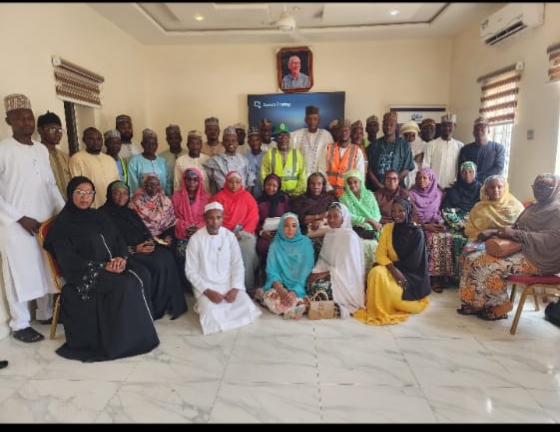
Stakeholders in Kano State has on Friday validated the state’s Climate Change Policy, with participants drawn from academia, civil society organisations, the judiciary, the civil service, the media, and organisations representing persons with disabilities.
The draft policy was unanimously adopted through a motion by participants, who recommended its approval by the State Executive Council before its transmission to the Kano State House of Assembly for legislative consideration.
The validation exercise was held at the conference hall of the Centre for Information Technology and Development (CITAD) in Kano.
Declaring the event open, the Commissioner for Water Resources, Environment and Climate Change, Dr. Dahiru Muhammad Hashim, represented by his Special Adviser (Technical), Prof. Aliyu Baba Nabegu, said more than 60 per cent of Kano’s population depends on farming for their livelihood.
He noted that climate change has significantly affected the agricultural sector, posing serious challenges to the state’s economy and the wellbeing of its people.
According to him, the state government has intensified efforts to address the effects of climate change, stressing that Kano faces increasing environmental challenges.
The commissioner also identified population influx from states such as Yobe, Taraba and Adamawa as another challenge, noting that migration into Kano has placed additional pressure on the state’s resources and infrastructure.
He said these realities made it necessary for the government to review its policies and adopt measures that reflect current environmental and socio-economic conditions.
Dr. Hashim disclosed that the government had dredged drainage channels across the state to reduce the risk of flooding during the rainy season and beyond.
He explained that the proposed climate change law would provide a legal framework for implementing the state’s Climate Change Policy and strengthening environmental governance.
Reviewing the draft bill, the Director of Legislative Drafting in the Kano State Ministry of Justice, Hajiya Rabi Ibrahim Waya, said the legislation had been tailored to meet the specific needs of the state.
She explained that extensive consultations were held with relevant ministries, departments and agencies before the draft was prepared and urged participants to examine it critically and make constructive recommendations.
Also speaking, the Legal Adviser in the Ministry of Water Resources, Environment and Climate Change, Barr. Bahijjah Hassan Aliyu, described the bill as a comprehensive legal framework designed to address climate change issues in Kano State.
She said the draft aligns with the national climate change framework and is ready for adoption, urging stakeholders to support its passage.
The ministry’s Director of Administration and General Services, Alhaji Abba Muhammad Kurawa, appreciated participants for their contributions toward validating the policy.
Similarly, the Director of Climate Change, Dr. Umar Saleh Anka, highlighted the importance of enacting climate change legislation in the state.
He expressed appreciation to the Partnership for Agile Governance and Climate Engagement (PACE), particularly Mr. Victor Ashriba and Malama Habiba Isyaku Njidda, for their contributions to developing the policy.

In their goodwill messages, Mr. Victor Ashriba of PACE, Hajiya A’isha Sulaiman Baffa, President of the Association of Grassroots Women Farmers of Nigeria and a member of the Kano Chamber of Commerce, Industry, Mines and Agriculture, Hajiya Maryam Liman of the Department of Environmental Management, Bayero University Kano, and Malam Hussain Gambo of the Ministry for Local Government and Chieftaincy Affairs commended the state government for the milestone.
They noted that Kano’s commitment to environmental protection and climate action had seen the state rise from 35th position two years ago to fourth among the 36 states in the federation.
They expressed hope that other states would emulate Kano’s efforts and also praised the strong participation of women at the validation exercise, expressing confidence that stakeholders’ inputs would strengthen the bill and empower local governments to play more active roles in addressing climate change within the legal framework.