


By Rabiu Sanusi
As the build-up to the 2027 general elections gathers pace, a strategic political realignment within the All Progressives Congress (APC) in Yobe State is beginning to reshape conversations about the state’s future, with Kashim Musa Tumsah emerging as a central figure in the evolving coalition.
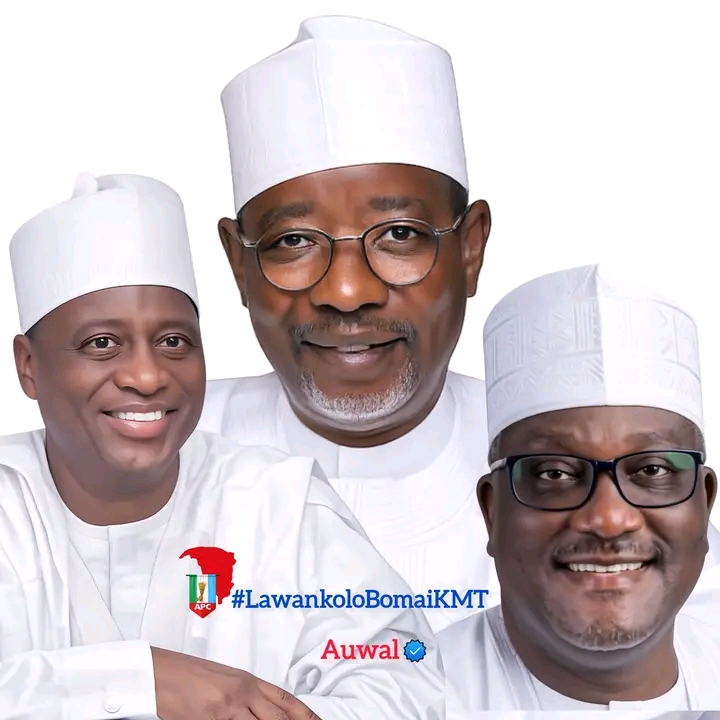
The alliance, popularly known as the Lawankolo–Bomai–KMT bloc, brings together influential actors, including Ibrahim Mohammed Bomai and Lawan Kolo Geidam.
However, political observers increasingly point to Tumsah as the driving force and intellectual anchor of the coalition, positioning him at the forefront of the movement.
The development is widely seen as a calculated effort to consolidate political strength within the APC, reduce internal fragmentation, and present a united front capable of navigating the complex electoral terrain ahead.
Analysts note that Tumsah’s rising prominence within the alliance is not accidental.
With a reputation for legal expertise, policy depth, and international exposure, he is being projected by supporters as a figure capable of bridging governance gaps and introducing a more structured, forward-looking approach to leadership in Yobe State.
The coalition itself reflects a deliberate balance of strengths. Senator Bomai brings legislative experience and strong federal linkages, while Lawan Kolo Geidam contributes grassroots mobilisation and administrative reach.
Yet, it is Tumsah’s perceived technocratic edge and reform-driven outlook that appear to be defining the alliance’s broader narrative.
Political stakeholders argue that such a united arrangement could significantly improve the APC’s electoral prospects in 2027 by fostering cohesion across geopolitical and social divides.
The alliance is also viewed as a platform for mobilising wider support and restoring confidence among party faithful.
Beyond political strategy, the bloc is being framed as a response to the pressing challenges confronting Yobe State.
Persistent insecurity, youth unemployment, weak infrastructure, and gaps in education and healthcare remain major concerns for residents, alongside economic hardship and perceptions of exclusion in governance.
Observers say the credibility of the alliance will depend largely on its ability to move beyond rhetoric and articulate clear, actionable solutions to these issues.
There are also indications that the coalition is subtly shifting the political conversation away from zoning and sectional considerations toward competence and merit.
Proponents argue that such a shift is essential for building a more inclusive and development-oriented political culture in the state.
Supporters further contend that the alliance is well-positioned to consolidate and expand on the achievements of the current administration under Governor Mai Mala Buni, while introducing new ideas aimed at accelerating economic growth and institutional reform.
While the political landscape ahead of 2027 remains fluid, the emergence of Kashim Musa Tumsah as a frontline figure within the Lawankolo–Bomai–KMT alliance signals a potentially significant shift in Yobe’s power dynamics.
As momentum builds, attention will increasingly turn to how the coalition translates its growing influence into a coherent agenda capable of earning public trust and delivering measurable progress.
For many observers, the message is clear: the road to 2027 in Yobe State may well be shaped by alliances that prioritise unity, competence, and a shared vision for sustainable development.
Sanusi writes from Kano and can be reached via babangidagora@gmail.com or 07067696174.